
The accident gets posted.
The firm that hears it first, wins it.
AccidentWhisperer · We Hear It First
After a crash, the story is public within hours — photos, video, and the victim asking in their own words what to do next. One accident story in our founder's own circle passed 2.5 million views in its first 16 hours — 3.4 million across two videos, while the comments debated lawyers and insurance in public and the insurance paperwork was still warm. Billboards advertise to a moment that already happened online. AccidentWhisperer listens for that moment, vets it, and puts it in your firm's CRM — source post attached, draft written, waiting for your attorneys' approval. It never contacts a victim on its own. Ever.
The Industry's First. AccidentWhisperer is the first listening engine built for accident law — and the first law app built on Deal Whisperer technology, the listening-engine family that began with Deal Whisperer for home services, then MoveWhisperer for realtors, and now AccidentWhisperer for law firms. The claim is scoped exactly that way — first on this technology, first for this work — because that is exactly what is true.
The Media Math. The case is the first value; the attention is the second. One accident in our founder's circle drew 3.4 million views across two videos — a media event no ad buy can guarantee. When a moment like that happens in your firm's region, your firm is positioned in the conversation from the first hour — attorney-approved, human-sent — and the follow-on attention routes back to your website and your channels. Most signals won't go viral. The ones that do are worth a year of advertising.
FOUNDING BUILD-OUT — READ THIS BEFORE ANYTHING ELSE.
Everything on this page describes the system as designed — and the design is what is being sold. But the honest state of the build matters more than the pitch: the law-firm engine components — the detection wiring for your segments, the region-tagging of signals, and your firm's CRM workflow — are following build slices. Founding activation includes the configuration and build-out of those components for your firm, and they land with the first signed firm. The listening engine behind AccidentWhisperer runs today for our own businesses; this system has not yet run for a paying law firm. Founding firms are buying in at the build-out stage, at founding pricing locked for exactly that reason — stated here, in the open, not in a footnote.
How It Works — Listen, Vet, Draft, Your Attorneys Decide
No black box, and no robo-soliciting. The engine hears public intent; your firm makes every contact decision.
The Orbital Ear — the listening engine's mark. It hears the post; your attorneys make every decision.
Listen
Scheduled sweeps of public Threads and the Facebook groups your firm's own account belongs to, scoped to your territory. If the listening account isn't a member of a group, we can't see it — and we say so.
Vet
Every candidate post is screened: a real person, first-party — their own accident, their own words — inside your territory, and recent. News stories, media accounts, bots, and fundraisers are rejected. A post that shows the person already has a lawyer is marked represented and never drafted.
Draft for Approval
The app writes a helpful reply draft in your firm's voice and parks it in your CRM's draft queue, with the source post and the accident date attached. Nothing is sent by the machine — there is no auto-send, on any surface.
Attorney Approves — Human Sends
A licensed attorney at your firm reviews and approves the draft — or edits it, or kills it. A human at your firm sends the approved message, from your firm's own account, in your firm's name. Your firm speaks; the machine never does.
Capture Into Your CRM
When the person engages — replies, asks a question, books a consultation — they become a case file in your CRM: intent category, source post, full stage history. Nothing is scraped from profiles; a signal becomes a file through engagement.
Prove It
Your portal view computes the two numbers that matter — cost per consultation booked and cost per signed case — from your own dispositions, graded against what a signed case costs you today.
The Six Signals the Detector Hunts
Just Crashed
"got into an accident today" · "someone hit me, what do I do" — posted from the scene or the same night
Injured — Other Driver Uninsured
"the guy who hit me has no insurance" · "hurting and don't know who pays my bills"
Totaled Car
"insurance says my car is totaled" · "their offer won't replace my car"
Hospital / ER
"just got out of the ER after a wreck" · "they kept me overnight, bills are coming"
Insurance Fight
"insurance is lowballing me" · "claim denied after my accident" · "adjuster won't call back"
Passenger Claims
"I was the passenger in a crash" · "my friend was driving, can I still claim"
Your CRM — Every Signal, Its Source, Its Stage
One inbox. Every vetted signal lands with its intent category, a one-line summary of the original post, and a freshness timer — because in injury law, the first firm to respond professionally usually wins the signature.
Source attribution on every signal — platform, group name (or "public post"), a link to the original post, intent category, territory, and the accident date as posted, which drives the 30-day compliance flag your attorneys see before any contact decision. Over time you can see which group in your city actually produces signed cases — a report no billboard sells you.
A draft queue, not a send button. Every outreach draft waits in the CRM until an attorney at your firm approves it. Approved, edited, or killed — the decision and the decider are logged on the record.
Per-signal notes and full stage history — your team's notes live on the record, and stage changes are timestamped, never overwritten. The ROI view is computed from those dispositions, not from anyone's say-so.
Your segment is exclusively yours. A segment is Region × Practice Area × Capacity — one ZIP-code region from the Regions board below, one practice area, one firm. One firm owns it; every signal inside it routes to that firm only — never shared, never resold, never shown to a competitor. An intake that collides with an owned segment is refused at the door, and the firm is told exactly why. A firm that practices several specialties runs one Whisperer per specialty — AccidentWhisperer for auto, its own app for each other practice area — each with its own feed and its own pipeline.
Founding status, plainly: the CRM workflow above is configured and built out during a founding firm's activation — it is a following build slice that lands with the first signed firm, not a portal a law firm has already operated. See the Founding Build-Out note at the top of this page.
Honest Coverage — What We Can Actually See
The listening runs only where a connected account can genuinely see. This table is the whole truth about coverage today — anything not listed is not covered.
The honest launch line: public Threads, plus the Facebook groups your firm's account belongs to — still the places accident stories break first, and a lane the billboards don't sell.
Community First Presence — The Legal Way To Be First
In social media marketing, one barratry complaint or Bar grievance costs more than years of this add-on. Community First Presence is the structure that keeps your firm's whole social presence inside the lines — a local accident-resource community in your region, operated for your firm and openly sponsored by it, "Presented by your firm." And because the presence is real, your firm never arrives cold: your name is known and trusted in your territory before any accident happens.
Built against the rules that end firms: the design answers to Texas barratry law (Tex. Penal Code §38.12; Tex. Gov't Code §82.065), the ABA advertising rules (7.1–7.3), and the FTC endorsement rules. The content itself is genuinely useful public material for the people in your region — what to do in the first 24 hours after a crash, insurance-claim timelines, the Texas 30-day rule explained in plain language, rental and medical paperwork checklists, and local road-safety reporting. It educates. It never solicits. Protection by design, not by promise — your counsel confirms the design, as with everything in this package.
- Sponsorship always disclosed. The presence carries your firm's name as its sponsor. It is never made to look independent of the firm behind it.
- Real voices only. Recommendations come from genuine community members and past clients, in their own words — never staged, never scripted — and any material connection is disclosed in the post itself.
- No intermediary solicitation — ever. The community never directs, steers, or routes an accident victim to your firm. No cappers, no runners, no "message us your case." That is the barratry line, and it is held by design.
- Your approval on everything. Every piece of community content passes your firm's approval queue before it publishes — the same rule as every other creative in the package.
Honest status: Community First Presence is part of the founding build-out — configured for your firm during founding activation, like the CRM. It is an optional add-on to the package, priced separately from the per-region fees:
CFP Activation
One-time, per region. Builds and launches your sponsored community presence.
CFP Monthly
Per region. Founding firms: $1,500/month for the first year (activation unchanged), then the regular $2,500/month.
3+ Regions
Firms holding three or more regions: CFP included at no charge — activation and monthly waived.
Founding example, labeled: a founding firm adding CFP to its first region starts at $35,000 (membership + first founding month) + $5,000 CFP activation = $40,000, then $15,000 + $1,500 = $16,500/month for year one.
Compliance-First, By Design
Texas barratry law isn't a footnote here — it's the architecture. This section is the product.
The law this design answers to. Texas barratry law — Tex. Penal Code §38.12 and Tex. Gov't Code §82.065 — restricts soliciting accident victims: in-person and telephone solicitation of an accident victim within 30 days of the accident is prohibited, and written or electronic solicitation carries advertising-disclosure rules. Nationally, ABA Model Rules 7.1–7.3 govern lawyer advertising and solicitation. AccidentWhisperer is built so a firm can hear first without crossing those lines:
- Public listening only. The engine reads public posts. It is never built on crash-report data, and never on a purchased list of accident victims.
- Never auto-contacts. No automated message ever goes to an accident victim — or to any poster. Zero automated outreach, on every surface, with no exceptions and no "auto mode."
- Attorney-approved drafts only. Every outreach draft is reviewed and approved by a licensed attorney at the firm before a human at the firm sends anything — from the firm's own account, in the firm's name.
- The 30-day wall is flagged, not guessed. Every signal carries the accident date as posted; signals inside the 30-day window are flagged in the CRM so the firm's attorneys apply the rule before any contact decision. The flag is a design aid — the legal call is always the firm's.
- Represented means untouchable. Posts that show the person already has a lawyer are marked represented at the vetting step and never drafted, never queued, never contacted through this system.
- Opt-outs are forever. Anyone who says stop — in any words, on any surface — is suppressed permanently, across the whole Whisperer family of apps.
- Your copy, your approval. All advertising copy, reply templates, and disclosures are the firm's to approve before any of it is used — the same compliance-review pattern our regulated buyers in other industries already work under. Nothing runs on your firm's behalf without your sign-off.
- No capability that requires breaking the rules. If a feature would require violating solicitation law to work, it does not ship. If a firm asks for auto-outreach to accident victims, the answer is no — the machine doesn't have that button.
Plainly labeled: these are design principles, not legal advice. AccidentWhisperer makes no legal determinations for your firm. Every firm confirms this design against its own bar rules, with its own counsel, before activation.
Regions — One Firm Per Segment
AccidentWhisperer's founding market is San Antonio, divided into regions — clusters of ZIP codes. The exclusivity unit is Region × Practice Area. Every signal is region-tagged by where the accident happened — its location and ZIP — and by practice area, and a firm sees only its own segments. The region-tagging wiring for a firm's segments is part of the founding build-out (see the Founding Build-Out note at the top of this page) and lands with the first signed firm. One firm per segment. When it's sold, it's gone.
North — Stone Oak / 1604
78258 · 78259 · 78260 · 78261
Auto AccidentsAvailable
Trucking & 18-WheelerAvailable
Workplace InjuriesAvailable
Northwest — Medical Center / UTSA
78229 · 78249 · 78240 · 78228
Auto AccidentsAvailable
Trucking & 18-WheelerAvailable
Workplace InjuriesAvailable
West
78227 · 78245 · 78251 · 78237
Auto AccidentsAvailable
Trucking & 18-WheelerAvailable
Workplace InjuriesAvailable
Central — Alamo Heights / Downtown
78209 · 78212 · 78215 · 78205 · 78204
Auto AccidentsAvailable
Trucking & 18-WheelerAvailable
Workplace InjuriesAvailable
South
78221 · 78223 · 78224 · 78242 · 78211
Auto AccidentsAvailable
Trucking & 18-WheelerAvailable
Workplace InjuriesAvailable
Northeast
78217 · 78233 · 78239 · 78247 · 78266
Auto AccidentsAvailable
Trucking & 18-WheelerAvailable
Workplace InjuriesAvailable
Boerne Corridor Premium
78006 · 78015 · 78257
Auto AccidentsAvailable
Trucking & 18-WheelerAvailable
Workplace InjuriesAvailable
Segment states: Available — open to the first firm that claims it. Sold — held by one firm; gone. Waitlist — if a held segment is ever released, the waitlist is called first. Every segment above is Available today — nothing is marked sold that isn't.
Firms may hold up to 5 regions.
Pricing — Locked, Flat, In the Open
Membership
One-time, paid up front. Activates your firm, your CRM, and your segment claim.
Founding Firm — First Region
The founding rate covers one region only — the first region your firm claims, and every practice area you take inside it. Locked for 12 months. To start: $20,000 membership + $15,000 first month = $35,000.
Regular — Every Other Region
Every region beyond your first bills at the regular rate — founding firm or not. No expansion discounts.
After the founding year: pricing adjusts annually, based on demand. Stated here, in the open — no fine-print games, no surprise renewals at a number you never saw.
What the founding rate is: a first-region courtesy for the firms that move first — nothing more. It is not a claim about results, and no results are promised, at any rate.
Flat subscription, never per-case. AccidentWhisperer never charges per consultation, per retainer, or per signed case. Fee-splitting rules (Texas Disciplinary Rule 5.04; ABA Model Rule 5.4) restrict sharing legal fees with non-lawyers — a flat subscription is the structure that stays clear of them, by design.
Straight talk: AccidentWhisperer is a new LeadLynix product. The listening engine behind it runs today for our own businesses; it has not yet run for a paying law firm, and no retention rate for this vertical exists. The prices above are published and locked anyway — and your portal still measures cost per consultation booked and cost per signed case from your own dispositions, so the readout is yours to judge.
Frequently Asked Questions
What is AccidentWhisperer?
AccidentWhisperer is the auto-accident listening app for law firms from LeadLynix, the premium vetted lead generation product of SyntheonSi.Tech. After a crash, the story is public within hours — photos, video, and the victim asking in their own words what to do next. AccidentWhisperer listens for that first-person accident intent on social media and in community groups, vets each signal, drafts a helpful reply for the firm's attorneys to approve, and captures engagement into the firm's CRM with the original post attached. It is the flagship of the LeadLynix Whisperer law line: one listening app per legal specialty.
Where does AccidentWhisperer listen?
On public Threads, and in the Facebook groups the firm's own connected account belongs to — a group is only visible if the listening account is a member of it. Facebook and Instagram public posts are spotted only: detected, logged, and routed to the firm, never replied to by the app. Nextdoor is not covered; no connector exists for it, and AccidentWhisperer does not claim otherwise.
Does AccidentWhisperer contact accident victims?
No. Never automatically, and never by machine at all. AccidentWhisperer listens to public posts, vets signals, and drafts replies. Every draft waits in the firm's CRM until a licensed attorney at the firm approves it, and a human at the firm sends it — from the firm's own account, in the firm's name. The app has no auto-contact capability, by design.
How does the Texas 30-day rule work in the design?
Texas barratry law (Tex. Penal Code §38.12 and Tex. Gov't Code §82.065) prohibits in-person and telephone solicitation of an accident victim within 30 days of the accident, and written or electronic solicitation carries advertising-disclosure rules; ABA Model Rules 7.1–7.3 govern lawyer advertising nationally. Every AccidentWhisperer signal carries the accident date as posted, and signals inside the 30-day window are flagged in the CRM so the firm's attorneys can apply the rule before any contact decision. The flag is a design aid, not a legal determination — these are design principles, not legal advice, and every firm confirms the design against its own bar rules with its own counsel before activation.
Who approves and sends the outreach?
The firm does — at both steps. A licensed attorney at the firm reviews and approves every draft; nothing leaves without that approval. A human at the firm then sends the approved message from the firm's own account. All advertising copy, templates, and disclosures are also the firm's to approve before any of it is used. AccidentWhisperer never speaks for the firm on its own.
Is my territory and practice really exclusive?
Yes. A segment is Region times Practice Area — one ZIP-code region, one practice area — times the firm's capacity. One firm owns each segment, ever; every signal inside it routes to that firm only — never shared, never resold, never shown to a competing firm. When it's sold, it's gone. An intake that collides with an owned segment is refused, and the firm is told why. A firm that practices several specialties runs one Whisperer app per specialty, each with its own feed and CRM.
How is AccidentWhisperer priced?
Pricing is published and locked. Membership is a one-time $20,000, paid up front. The regular rate is $25,000 a month per region. A founding firm — the first firm to claim a region — pays $15,000 a month for that first region — against the regular $25,000 a month — locked for 12 months, so it starts at $35,000; the founding rate covers one region only (every practice area the firm takes inside it), and every additional region bills at the regular $25,000 a month, with no expansion discounts. After the founding year, pricing adjusts annually based on demand. Exclusivity is absolute: one firm per Region × Practice Area segment — when it's sold, it's gone. And it is always a flat subscription, never per-case: fee-splitting rules (Texas Disciplinary Rule 5.04; ABA Model Rule 5.4) restrict sharing legal fees with non-lawyers, so AccidentWhisperer never charges per consultation, per retainer, or per signed case.
What do I see in the AccidentWhisperer CRM?
A signal inbox with each signal's intent category and a summary of the original post, a draft queue where every outreach draft waits for attorney approval, a pipeline running New Signal, Reviewed, Contact Approved, Consultation Booked, Retained, Closed — with Nurture and Dead side exits that keep their history — per-signal notes, and full source attribution on every signal, including the accident date as posted. The portal view computes your cost per consultation booked and your cost per signed case from those dispositions, graded against the cost line you entered at intake.
Is this legal advice?
No. The compliance section of this page describes design principles — how the machine is built so that a firm can use it inside Texas barratry law and national lawyer-advertising rules. It is not legal advice, and AccidentWhisperer does not make legal determinations for any firm. Every firm confirms the design against its own bar rules, with its own counsel, before activation.
Built by a Salesman, Not a Billboard Company
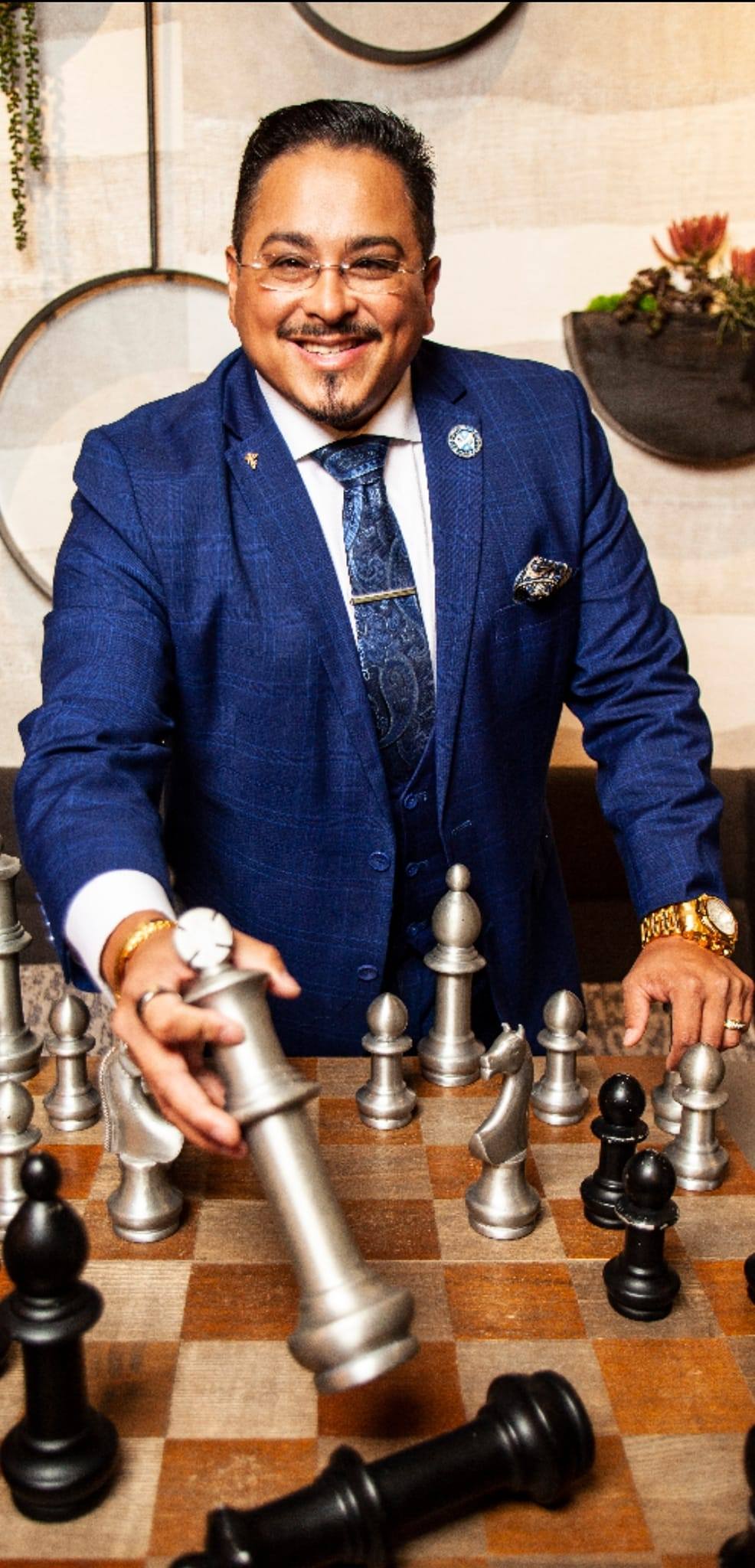
Rocky Garcia
Rocky Garcia built his career in sales rooms — and watched injury firms spend fortunes advertising to yesterday's accidents: billboards over highways the crash already left, ads that arrive weeks after the story broke.
The real moment happens first, and in public — a post, a video, a victim asking their neighbors what to do. Two days before this app was built, a friend of Rocky's crashed his car and his story passed 2.5 million views in its first 16 hours — 3.4 million across two videos. AccidentWhisperer is the machine that hears that moment inside the rules — attorneys approving every word — and hands it to one firm, with the conversation attached. It is a LeadLynix product, built by SyntheonSi.Tech.
Watch it yourself: The hospital video (2.5M views) · The dashcam video (942K views)
Firm Intake — Claim Your Region × Practice Area
Every intake is reviewed by a human. If your region × practice segment is open, it is reserved for you; if it is taken, we tell you straight — and exactly which segment is held.